Introduction
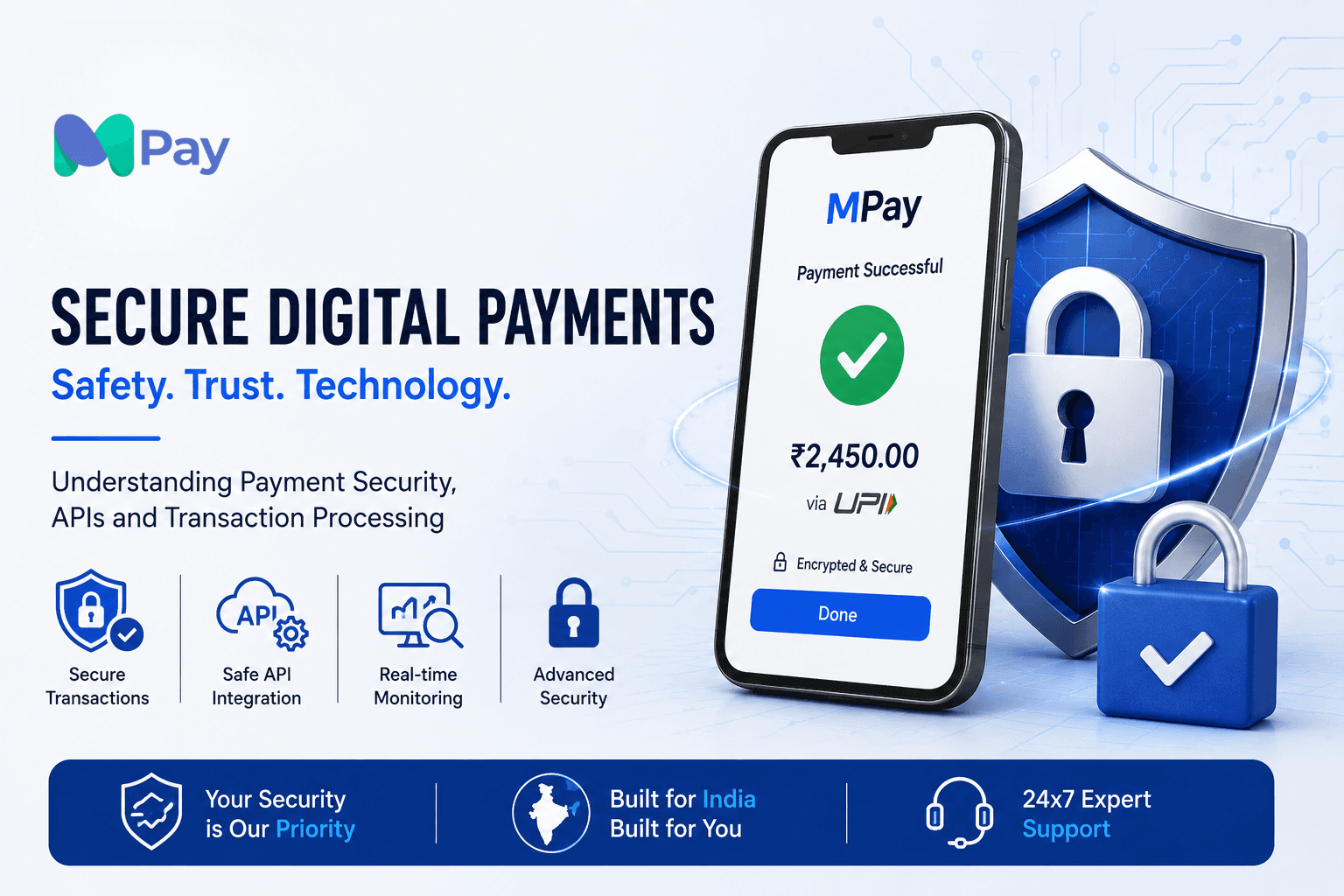
Digital payments have made financial transactions faster and more convenient for consumers and businesses. However, as digital transaction volumes grow, payment security has become an increasingly important consideration.
A modern digital payment experience requires more than a simple “Pay” button. Behind every transaction can be a complex technology ecosystem involving payment interfaces, APIs, authentication, transaction processing, payment networks, security controls, monitoring, and reconciliation.
For businesses adopting digital payment technology, understanding this infrastructure is important.
MPay, powered by MMADPay, operates within this broader fintech and digital payment ecosystem, where convenience, technology, reliability, and security are key considerations.
What Are Secure Digital Payments?
Secure digital payments are electronic transactions supported by appropriate technology and security mechanisms designed to protect transaction processes and sensitive information.
Security can involve multiple layers, including:
- User authentication
- Access controls
- Encryption and secure communication
- Transaction monitoring
- Fraud detection mechanisms
- Secure API architecture
- Data protection
- Payment authentication
- System monitoring
- Regulatory and industry compliance
The specific controls required depend on the payment technology, transaction type, infrastructure, and applicable regulatory requirements.
How Does a Digital Payment Transaction Work?
A digital payment may appear instantaneous to the customer, but several technical processes can occur behind the scenes.
A simplified transaction flow can include:
Customer → Payment Interface → Payment Gateway/API → Payment Processing Infrastructure → Relevant Payment Network/Institution → Transaction Response → Merchant
The systems involved communicate transaction information, process payment instructions, authenticate where required, and return a transaction status.
Modern payment infrastructure is designed to coordinate these processes efficiently.
Why Payment APIs Matter
APIs are an important component of modern fintech infrastructure.
A payment API allows a business application to communicate with a payment platform or payment service.
For example, an e-commerce application may use an API to initiate a transaction and receive information about its status.
From a development perspective, a robust payment integration may need to address:
- Authentication
- API keys or access credentials
- Secure requests
- Response handling
- Transaction IDs
- Status management
- Webhooks
- Error handling
- Timeout management
- Retry logic
- Logging
- Monitoring
- Reconciliation
Developers should always follow the payment provider’s official technical documentation and security requirements.
Payment Authentication and Customer Security
Authentication helps establish that a transaction is being initiated or authorised by an appropriate user.
Depending on the payment method and applicable requirements, authentication may involve different mechanisms.
Customers should understand that legitimate payment platforms and financial institutions will not normally ask users to disclose confidential credentials such as passwords, PINs, or OTPs to unknown individuals.
Security awareness is therefore an important part of the digital payment ecosystem.
UPI and Payment Security
UPI has become an important component of India’s digital payments ecosystem.
While UPI provides a convenient way to initiate digital transactions, users still need to follow basic security practices.
Customers should:
- Verify the recipient before approving a transaction.
- Never share their UPI PIN.
- Never share OTPs or passwords.
- Avoid suspicious payment links.
- Verify payment requests carefully.
- Use trusted applications and devices.
- Report suspicious transactions through appropriate channels.
Businesses should similarly follow appropriate technical and operational security practices.
What Is Payment Transaction Monitoring?
Transaction monitoring refers to the process of observing payment activity and identifying unusual patterns, transaction states, failures, or other events that may require attention.
For businesses operating at scale, transaction monitoring can provide important operational visibility.
Monitoring may help teams understand:
- Successful transactions
- Failed transactions
- Pending transactions
- Refunds
- Payment errors
- Transaction anomalies
- System performance
- Payment trends
The exact monitoring capabilities available depend on the payment platform and implementation.
Payment Reconciliation and Operational Security
Payment reconciliation is another important component of digital payment operations.
A transaction may involve multiple systems, and businesses need to ensure that transaction records are consistent.
Reconciliation processes can help identify:
- Unmatched transactions
- Incorrect records
- Failed transactions
- Refunds
- Pending settlements
- Transaction discrepancies
For businesses processing significant transaction volumes, automated reconciliation can reduce manual effort and improve operational visibility.
Building Trust in Digital Payments
Trust is critical to the adoption of digital payments.
Customers want to know that the payment experience is legitimate, reliable, and secure. Businesses want dependable technology infrastructure that supports their customers and operations.
This means payment security should not be treated as a single feature.
Instead, it should be considered as part of the entire payment lifecycle—from customer interaction and API communication to transaction processing, authentication, monitoring, and reconciliation.
MPay and Technology-Driven Payments
MPay, powered by MMADPay, is part of a fintech environment where digital payments are increasingly connected to business technology.
The objective of modern payment technology is to create experiences that combine convenience with appropriate security, reliable infrastructure, and efficient transaction processing.
As digital commerce continues to grow, businesses will increasingly need payment infrastructure that can work alongside their existing technology systems.
The Future of Payment Security
Payment security will continue to evolve as technology changes.
Artificial intelligence, machine learning, behavioural analytics, automation, real-time monitoring, tokenisation, identity technologies, and advanced authentication can influence the future of payment security.
At the same time, businesses must continue to monitor regulatory developments and adopt appropriate security practices.
Technology alone cannot eliminate every risk. A secure payment ecosystem requires cooperation between technology providers, businesses, financial institutions, regulators, and customers.
Frequently Asked Questions
What is payment security?
Payment security refers to the technologies, processes, controls, and practices used to protect digital payment transactions and associated information.
How can customers make digital payments safer?
Customers should use trusted payment applications, verify transaction details, avoid suspicious links, and never share confidential credentials such as PINs, passwords, or OTPs.
What is a secure payment gateway?
A secure payment gateway is payment technology designed to facilitate online payment transactions while implementing appropriate security and authentication mechanisms.
What is payment API security?
Payment API security involves protecting the communication between applications and payment infrastructure through appropriate authentication, access control, secure communication, monitoring, and other technical safeguards.
Is UPI safe for digital payments?
UPI is an established digital payment mechanism, but users must still follow appropriate security practices and protect confidential authentication information.
Why is transaction monitoring important?
Transaction monitoring provides businesses with visibility into payment activity and can help identify unusual transactions, failures, pending payments, and operational issues.
What is payment reconciliation?
Payment reconciliation is the process of comparing transaction records across systems to identify matching transactions and discrepancies.
The future of digital payments depends on both convenience and trust.
As businesses adopt fintech technology, payment APIs, payment gateways, UPI, transaction processing, authentication, monitoring, reconciliation, and payment security will remain important components of the digital payment infrastructure.
A successful digital payment ecosystem requires technology providers, businesses, and customers to work together toward reliable and responsible digital transactions.
MPay, powered by MMADPay, is positioned within this evolving fintech landscape with a focus on technology-driven digital payment experiences.
MPay – Powered by MMADPay.